"If you want to go fast, go alone. If you want to go far, go together."
-African Proverb
I saw this proverb on my in flight movie on the way to the British Virgin Islands. I read it and processed it after a minute, the movie was emotionally draining and processing this proverb took minute. Fortunately I had the luxury of rewinding. This trip is all about coming together as nonprofits as women and as mothers and daughters to change the world. Anyone who works in the nonprofit world can tell you sometimes coming together can be difficult. Some people view each other as competition, as in we are all competing for the same all mighty donation. To us we just want to make a difference and the only way we see that happening is if we come together.
We all come from different walks, but not so extraordinarily different. We all hail from the U.S. but we all have traveled pretty extensively so we understand some of the issues we face, but we have never lived it. How do you tell someone living in extreme poverty to think about the products they use in terms of the environment?
Jennifer Palmer, a lovely woman and marine biologist on the boat, has just come back from a four month trip traveling mostly through villages in Indonesia. In some of these places the only clean water is is through a water bottle. Or now the only way they could find laundry detergent was in single-use packets. Not only is this not cost effective, in an area that could use cost effectiveness more than anything, it is extremely wasteful and not ecomonically sound. In a place where there is literally nowhere to put waste. Who is running the dog and pony show over there? To create change globally, we need understand the way others live. As Tonia Lovejoy, founding member of Beautiful Nation often asks, "How does where you live effect how you live?" This question is one of many this crew has been wrestling this past week.
These are the big questions with multifaceted answers, this trip is about making a roadmap to those answers by way of educating children around the world. Olivia Ries has been giving us been educating us through the OMG curriculum, helping us get the tools we need to go out into the world and educate others. Because we won't have all the answers, but we may spark the interest of the kids who will.

This blog shares the research experiences and findings conducted at University of North Carolina Wilmington (UNCW faculty and students) in conjunction with Plastic Ocean Project. Earlier posts share open-ocean sampling and adventures in the North and South Atlantic, the South Pacific and the North Pacific Great Pacific Garbage Patch. Outreach and education is the primary purposes to bring global awareness to an issue that has reached a crisis level in the marine environment.
Wednesday, January 21, 2015

Monday, January 19, 2015
WOmen, Water, and Waves
We have very little access to Internet but we do have Beautiful Nation telling our stories from three mother daughter teams and of course the other 8 who all have mothers that created these people who work tirelessly on behalf of Mother Earth. Please learn more by following this link! http://www.beautifulnationproject.org/blog


Saturday, January 10, 2015
Mama Let Your Daughters Grow Up To Be Sailors
This week POP, Inc. will be joining Beautiful Nation
Project’s leg with Pangaea Explorations, sailing from Tortola, British Virgin
Islands to Turks and Caicos. And we just got word that One More Generation
(OMG) is going to partake in the voyage as well. To say this is but a dream
would be an understatement. Between our traveling art show making it across the
United States and our matching campaign with All At Once as part of Jack Johnson Ohana Foundation, we can say we
had our best year yet. With all of the
wonderful things happening it goes without saying for me and Bonnie it has been
a whirlwind of excitement with a touch of exhaustive hard work that has left us
with hope.
 The payoff of our work will be a little more work, but who
can complain when the work is being done on a sailboat! We have the unique
opportunity to be part of a crew that will be conducting research by trawling
for marine debris as well as visit local schools leading discussions about our
‘plastic footprint’ and the challenges their communities face because of it.
The goal of this voyage is to create a toolkit for students to give plastic a
global value. Our crew has the right combination of passion, brains and
creativity that could inspire real change on the islands and ultimately
the planet.
The payoff of our work will be a little more work, but who
can complain when the work is being done on a sailboat! We have the unique
opportunity to be part of a crew that will be conducting research by trawling
for marine debris as well as visit local schools leading discussions about our
‘plastic footprint’ and the challenges their communities face because of it.
The goal of this voyage is to create a toolkit for students to give plastic a
global value. Our crew has the right combination of passion, brains and
creativity that could inspire real change on the islands and ultimately
the planet.
Hope is what keeps us going, not just at POP, Inc., but also
as human beings. We all have something we are striving for and while we work
our way to get it, hope is at the end of the tunnel. This voyage is particularly
special because we will have three sets of mothers and daughters on board. From
Beautiful Nation Project there will be Tonia Lovejoy and her mother Debbie
Winterbauer. Their shared reverence for the planet has helped mold a geosocial
network that provides free educational resources for schools across the globe.
Take a look here and see how you can join the network http://www.beautifulnationproject.org.
Also joining the crew are Olivia Ries and her mother, Lauren. Olivia who is now
10 years old started One More Generation with her brother in 2009; to say she
is a remarkable young person would be putting it VERY lightly. Olivia and her
brother, Carter, have done more for conservation and education than most
politicians, celebrities or maybe even the Dalai Lama. I am in awe of their
dedication, creativity and their understanding of the importance of educating
others, especially their peers. A simple google search of them returns accolades from all corners of the earth, or you can check them out here http://onemoregeneration.org don't forget to watch the video below and be in
awe for yourself. The last of the mother daughter teams is me and Bonnie (who I
affectionately call Bon Bon), she is the reason I am here on this beautiful
planet and why we get to be in such inspiring company for nine days.
 Bon Bon and I may have started our journey together in 1983,
but our desire to save our oceans started more recently. In 2008, Bonnie read
an article about the North Pacific Garbage Patch and just like that an activist
was born. She began reading, listening or watching anything she could get her
hands on to learn about the problem our oceans were facing in regards to marine
debris. It became all she talked about with me and my brother, at first, I’ll be
honest, it was a little overwhelming. But we all changed our ways; her passion
to save our oceans soon became my passion and I have been working with her ever
since. The trouble is we are 700 miles away from each other and very rarely get
to work hands on together, this opportunity is something we have been hoping
for, for a very long time.
Bon Bon and I may have started our journey together in 1983,
but our desire to save our oceans started more recently. In 2008, Bonnie read
an article about the North Pacific Garbage Patch and just like that an activist
was born. She began reading, listening or watching anything she could get her
hands on to learn about the problem our oceans were facing in regards to marine
debris. It became all she talked about with me and my brother, at first, I’ll be
honest, it was a little overwhelming. But we all changed our ways; her passion
to save our oceans soon became my passion and I have been working with her ever
since. The trouble is we are 700 miles away from each other and very rarely get
to work hands on together, this opportunity is something we have been hoping
for, for a very long time. One way or another each of us embarking on this voyage has been inspired by our family, and it is the hope for our future generations that keeps us going. I think this group is on the cusp of something magical and truly believe we will make a great difference. Keep a lookout for our happenings along the journey #ImonTHEBoat
For more information about Pangaea Explorations visit their
website http://panexplore.com
And again, these kids...AMAZING!
And again, these kids...AMAZING!
Written by: Tricia Monteleone
Sunday, November 16, 2014
Rock-O-ber: From rocking the art van to a hurricane
 |
| POP Inc.'s art exhibit at the Fort Fisher Aquarium, NC |
What a rocking October for Plastic Ocean Project, Inc. As of October 1st our traveling art exhibit arrived in California making it's 26th and final destination as part of the funding from Project Aware. We had one year to complete the cross country exhibit and on December 1st, it will be on display at the Aquarium of the Pacific, Long Beach, CA. Project Aware does so much good, not only by helping protect marine life like sharks, but also fund diving campaigns and helps small non-profits like ours accomplish big goals. But we would have not been eligible for those funds if it weren't for our supporters voting for us to win the grant money to get our show on the road. Through this initiative we have shed light on the proliferation of plastic marine debris to 1000s more people of all ages. Now to find funding to help bring it back across the US.
 |
| Pyramid Lake, NV |
Mid-October, we spent two weeks sampling off the shores of Bermuda. What made this years sampling even more unique was the fact that we had the opportunity to sample after a tropical storm AND a category 2 hurricane. We now have five years of open-ocean samples collect in the N. Atlantic gyre with significant evidence from this last outing that put exclamation points on top of the results established over the past four years. Just a couple examples.
1. Just like gyre circulation systems are a transport for plastic marine debris on a grand scale, surface eddies serve as mini gyre systems.
 |
| Visible convergence zone where plastic and marine life meet |
2. Convergence zones where different temperatures of waters meet are aggregates for marine life as well as free floating plastics making plastic debris more readily available for ingestion and entanglement. Here is a video where you can see a convergence zone notice the teal blue waters of Bermuda butting up against the deep colder waters of the open-ocean. We could actually see with your own eyes all the trash along this edge. So if Boyan Slat wanted to find a sweet spot for his ocean cleaning device, he might want to start in regions like this - not too far from land.
 |
| Sampling in 4' seas in the N. Atlantic gyre |
But Plastic Ocean Project, Inc goes beyond research and outreach, we are also about collaboration. We asked Beautiful Nation Project if they would like to join us on our fall N. Atlantic research cruise with Woods Hole Oceanographic Institution (WHOI) Maureen Conte, PhD. They accepted and for those of you with middle school children and/or educators, visit their website. They are using ships of opportunity as a means of an educational platform to bring ocean science and the students around the world into your classroom.
 |
| N. Atlantic surface sample |
Monday, October 20, 2014
Hurricane Gonzalo Stirs Up the Sea and Spits Out Plastic
 When we signed on to do our fifth year of sampling in Bermuda we had no idea that this year we would have an opportunity like no other. We were provided the chance to sample beaches before and after a hurricane, when does that ever happen? And exactly what we hoped we wouldn't find we found, but we were glad we were there to document it.
Hurricane Gonzalo ripped through Bermuda and what washed in wasn't pretty. The sargassum was full of plastic particles, the pictures don't do it justice as the whole beach was covered with sargassum just like this. It's so disheartening to see this outcome, as if we needed another eye-opener. To know that animals are mistaking these pieces of plastic for food, and even if they weren't and they were to go eat a piece of sargassum they would end up with plastic as a side dish. To me that seems like being at your favorite restaurant and finding a short and curly in your favorite dish, not appetizing and definitely not healthy.
 Bermuda wasn't the only island to get hit, and they are certainly not the only island with plasticized sargassum. They've all started their clean ups on the islands, but the clean up needs to start now in our everyday lives. How are we going to stop this from taking over our beaches our oceans?
It is time for us to head out to sea, to see what Gonzalo has in store for our next few days of surface sampling. I'm curious to see in the aftermath of a hurricane what the trawl will come out with. Will we see what we saw on the beach or have the rough seas hidden the problem just under the surface? We'll find out and let you know soon.
Written by: Tricia Monteleone
Wednesday, October 15, 2014
POP Hopping the Bermuda Triangle
 |
| Surface sampling in a desert lake |
You might say Plastic Ocean Project has been getting around! Two weeks ago we surfaced sampled Pyramid Lake in Reno, NV, had a beach cleanup at Santa Monica Beach, CA organized by high school student Leyla Namazie, combining forces with St. Mary's College and Heal the Bay, collected trash while visiting with Ocean Defenders Alliance, Huntington Beach, CA, and currently joined Beautiful Nation Project in Bermuda to show students from schools around the world how we study plastics in the ocean. Phew, its been busy.
 |
| Mark Gandolfo UNR exams sample |
 Thanks to
the funding from Project Aware who funded our plastic trash art exhibit, we successfully delivered "What goes around, comes around" to southern California where it will go up on display at the Aquarium of the Pacific come December 1st. Another success, thanks to the generous contributions from people like
you, singer-songwriter Jack Johnson matched donations of $2500 so we can continue
the work with so many people across the country and across the pond to Bermuda. We will be going out to sea with Bermuda Institute of Ocean Sciences working around the hurricane that is headed this way. Stay tuned!
Thanks to
the funding from Project Aware who funded our plastic trash art exhibit, we successfully delivered "What goes around, comes around" to southern California where it will go up on display at the Aquarium of the Pacific come December 1st. Another success, thanks to the generous contributions from people like
you, singer-songwriter Jack Johnson matched donations of $2500 so we can continue
the work with so many people across the country and across the pond to Bermuda. We will be going out to sea with Bermuda Institute of Ocean Sciences working around the hurricane that is headed this way. Stay tuned!
We will begin our surface sampling tomorrow so stay tuned to
see what the Tropical Storm Fay might have dragged in.
Tuesday, October 14, 2014
Big Skies, Boulders, and Blue Minds

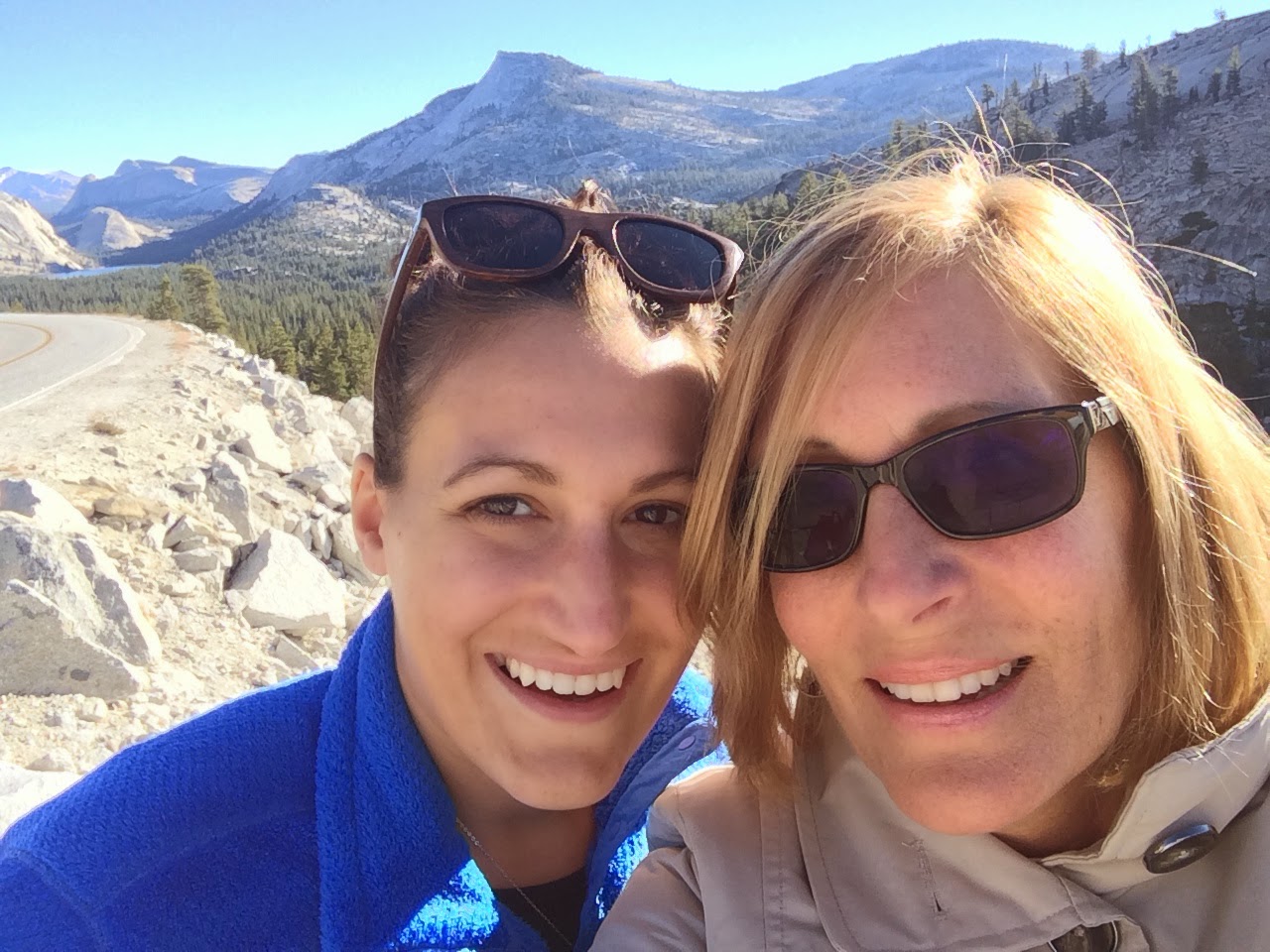
We awoke to the sun creeping over the mountains as we
watched the long jagged mountain shadows gently shrink to yellow beams
of light over Mono Lake. Little did we
know we parked just feet from the entrance to Yosemite National Park. We couldn’t resist a detour.

Subscribe to:
Posts (Atom)